Latest Posts

Why I am Happy

I hate summers.  Every year by fall the words tumble out. Admitting it seems sacrilegious. And yet there it is. Even today, as I savor the summer world waking up, I know that it’s not completely true. I don’t really hate it. But still.
 
No. Not still. That’s the problem with summer, I think. All the hubbub and activity. Summers are composed of too muchness. Overwhelm. Not enough stillness. So big. So busy. So much coming and going and not enough time to land. 


 Like most everyone around me, I’ve been trying my best to make up for lost time with family and friends while responding to the reality of a rapidly shifting world. Yesterday I sat for a time in my garden, trying to catch up with myself. Essentially nothing from my activity-based checklist is completed, and yet already there’s that sense of depletion. A phrase from a beloved poem by William Stafford, Why I am Happy popped into my mind. My framed and beautifully scribed copy burned in a forest fire last fall, but the wonderful thing about words is they don’t burn but keep doing their magic as long as we can string a few phrases together.
 
The next words, I let it roll, come into my mind.
My to-do list for the next month just got a whole lot shorter. 
 
And so we come to my summer wish list for you, my friends: 
 
May you let it all roll as you remember the peace and ease of the blue and free lake you already carry inside yourself.May that elusive peace of mind be your guide as often as you can during these precious days.
 
It’s a wish and a prayer. For you. For all of us.
 
SgB 8/2021

Now That I Know

Now that I Know…

These are the words of my spiritual director, a radical priest who holds space in a small loft in Portland. I’m not a Catholic, but I trust this guy.

I’ve just weathered the traumatic accidental drowning of a friend and an addiction crisis with a family member. Both were situations requiring me to find the ground under my feet ASAP while at the same time surrendering to all the things I couldn’t control even if I wanted to. Other people’s needs seemed to dictate my days. 

Now that I know, he said quietly. 

What?  I asked, leaning in.

What did you learn? What do you know now that you didn’t know before? He asked.

For a moment the overwhelm and fog lifted. Clarity. A felt sense of calm, a perspective. A way to move on.

This question is one I find myself still when I’ve just been through Something.

What do I know NOW? After the anxiety and confusion and losses of the last couple of years, it’s a critical question. What lessons has this time in history offered up for me, at a deeply personal level? The old growth forest and my summer home, two things that anchored me to the deep healing of nature are gone.

I’ve lost friends to Covid and to QAnon. With or without my mask, people who once smiled or waved seem somehow distant. Elders in my community seem more frail. And my 14-year-old dog struggles more every day on our one-mile stroll/sniff.

Life. Now that I know its losses more personally, how do I renew my vows, now that I know how very fragile the things I always took for granted are, what do I know?

I look around me this summer morning. The ground is still there. My heart is still beating. My feet are still walking. The sky that served up a Heat Bubble last week is offering clouds and the sweet distant ocean moisture.

Now that I know the JOMO (the Joy of Missing Out) on the complications of community and over-commitment, there’s a steadier connection with my own clarity of purpose, with my own heart. With solitude and sovereignty of my very own life.
Now that I know this joy, how willing am I to throw it away trying to create the world from Before Times? Sounds a lot like a new episode of my ongoing life challenge setting boundaries.

I’m not willing to give up too much of myself to others. But will I? Sometimes. And that’s okay.

Because when I remember this simplicity, this moment, I have the necessary grounding to discern what’s worth keeping. And then I venture with a deeper understanding of what I need in the Now Time.

Seeking Space for Solitude

Dear Friends,
 
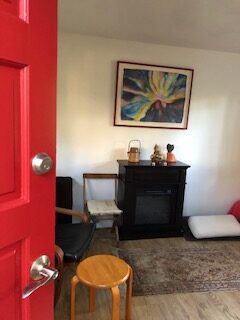
As we enter a post-lockdown world, many folks are ready to make up for lost time in the social whirl. But if you’re finding it difficult to reconnect with the demands of the interactive human world, you’re not alone. Literally. A lack of personal space or forced togetherness has been tough on everyone, but the reality is that for some it has been harder than for others because (newsflash) we’re all different. Just as most humans crave connection, others long for a permeable membrane so that they won’t lose touch with that quiet inner voice they hear best in solitude. Hello Neurodiversity. If you’re in the last group, I suggest you read The Divergent Mind (see below) to help you understand youOSU Pillows Lightsr introverted or sensitive self. Then start where you are. Claim a space (or a time) wherever you are to ground and center. Even a small corner of your apartment or bedroom works to start. Check out ideas and links here to create a “virtualMindSpa:” (with thanks to Oregon State University’s CAPS program). Later, as you move into new or bigger spaces, you may find the idea has expanded, as it did for me.

 
A Room of One’s Own. When I was a mother of young children with a marriage in tatters, the title of Virginia Woolf’s 1929 manifesto began to haunt me. My little corner of the bedroom no longer offered the precious personal space I needed. I claimed one of the tiny bedrooms in our ranch house as my own space, with an actual door. I remember painting it white against all advice. It looked more like a padded cell than a retreat space, which is just what I needed at the time. While the children grew, I began imagining a third life stage, when I’d vanish into a cave in India or commit to a simple life inside a Carmelite monastery cell. While other mothers fantasized about dealing blackjack in Vegas, I saw myself as an Anchorite, like those nuns in the middle ages who stayed in place, praying for divine wisdom, advising pilgrims who came to them with a word or a verse. I continued to long for solitude even as I was (mostly) enjoying a sweet life with family and community.
 
A Room of One’s Own. Twenty years later I headed over to a monastery to check it out. Eventually I trained as an ecumenical “spiritual director,” which involved little directing and a lot of listening. I claimed our little garden room as my Oasis, and I began to invite a few people, one at a time, to listen to the fountain and to smell the jasmine, to engage in inquiry and conversation. I created an online landing place. And presto. I was an anchorite without leaving home. This oasis is still the perfect setting for early morning meditation, but there’s enough clanging and banging in everyday life that my very distractible inner monkey has been having a field day. Listening to that still small voice took more and more uninterrupted time.
 
A Room of One’s Own. Then along came the many-tentacled pandemic. As we sheltered in place, the refrain returned, this time like a desperate shriek during the togetherness time of the lockdown. I was in luck. A couple of years ago, we cleared out our bike shed and turned it into a tiny “she shed’ where my nomadic daughter could land between musical tours. Covid brought her home and moved her into her own place of her own. And the space became vacant. You can see where this is going. I now have a separate space of my own, a place to retreat and write and listen to the precious uninterrupted voice of solitude. A Housie of My own.
 
IMG 3060

IMG 3061


In the middle of current real estate craziness, this may not be on your immediate horizon. But you can start where you are. A corner can become a room can become an oasis can become a housie.
 
It all starts with listening and tiny little steps.
 
Love from the Housie, 
 
Susan Grace
 
Divergent MindThe Divergent Mind:
A game changer. You may have missed the memo since this ground-breaking book was released on the exact day of the first lockdown in the spring of 2020. This well-researched book has given me a deeper understanding of my own nature and the ways of many of my clients. It’s also helpful in explaining to friends and family the neurological differences those of us who are highly sensitive or introverted often struggle to find the words to communicate for ourselves. 
 

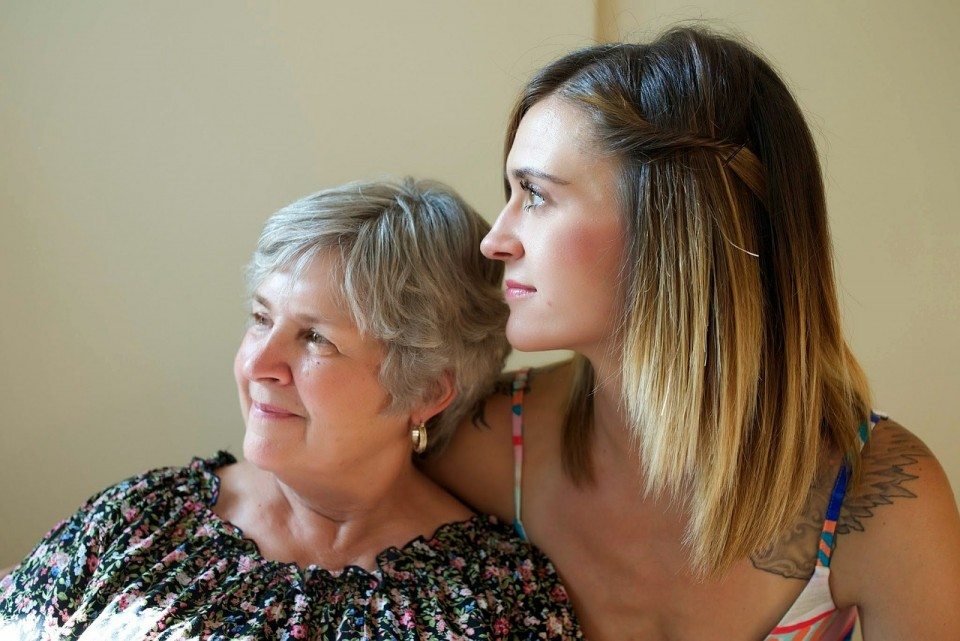
Mothers Dreaming Daughters and a Future
Dear friends,
 
It’s complicated here in this Bardo, this world between worlds that we call 2021. Like any animal emerging from a cocoon or hibernation, many of us are tender and tentative. As we take each step toward “normal,” we ask ourselves, Now where was I?  (in the Before World). But in all the excitement, we can easily forget to ask Who am I Now? No longer in the old safe world of traditional etiquette, we’re on our own to find some graciousness as the world keeps changing. Daily. Mask on or off? How to come up with safety agreements with people we love who nonetheless disagree with us on the red-hot subject of vaccinations?
 
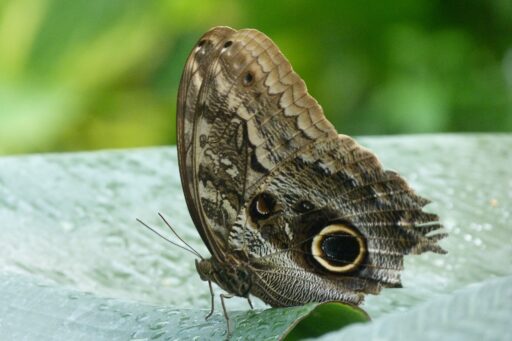
Decision fatigue alone is enough to make you want to crawl back into lockdown. There’s no One Size Fits All, and we’re on our own to fashion something that works each time we engage with our families and friends. Even if we figure something out, there’s no guarantee that things won’t all change again. Quite the opposite. This requires a flexibility and equanimity I’m only beginning to feel in this life. If we were butterflies emerging from the cocoon, we’d flap our new wings before flying into this new world. The human equivalent is to take that second question about who I am now more seriously. To take time to adjust to this new reality before taking a giant leap back OR forward in this Simon Says world of the pandemic.
 
Sometimes when I need perspective I look to my ancestors for inspiration. I found some by going all the way back to the Yellow Fever epidemic of 1870. My great great grandmother Maria Raum, a new immigrant, lost her husband and an unborn baby to the Yellow Fever plague in Memphis after his beer wagon was commandeered to remove bodies. Maria was left penniless and unable to feed herself and her 3 and 5 year old daughters. Unable to go back home to Germany, unable to speak the language of the new world, she did what she had to do so that they would survive. She sent them off to a Lutheran orphanage while she worked as domestic help and saved enough money to be able to support them. After three years she emerged from the world of pandemic domestic service to find they had been packed up and loaded onto an Orphan Train headed west. Hundreds of miles and inquiries later she found them living with their new farm families.
 
What she did next is my favorite page of family history. Instead of fighting to reclaim her girls, she and her new husband built a house down the road to watch them grow and have children of their own. She’s buried in a small German cemetery near her daughters and their adoptive families. Now that’s a radical form of resilience, an example of true Motherlove. 
 
I call on this grace and resilience as I dream of what this next world might become. I’m beginning right here, where I am today, dreaming this new future, knowing even if it all changes love will find a way. Always does in the end.
 
 
Poetry reading posterPS. I’ve been writing more poetry during our current pandemic. I’ll be reading this new poem about my mother’s mother’s mother, this week, along with my Open Handed Writers’ group and friends. It’s a free Zoom call (with the support of our local bookstore)
 
If you’re reading this May 5th, come listen tonight at 7 PT and join us as we celebrate Mothering as a Verb. Just visit this page for the link.


Dreaming Daughters
 
The women in my family dream their daughters,
And so I dreamed you up, a strong Baby Woman. 
Just as my mother dreamed herself a sister instead of a baby
And her mother dreamed a prodigy, Shirley Temple of Saline County.
And her mother before her dreamed up a milliner.
But the mother before that, a new immigrant turned into a widow by Yellow Fever,
That mother just dreamed of getting her daughters’ bellies fed
 
And so she let them go by boat to an orphanage, 
signs hanging from necks in the only language she knew,
saying keep them safe and I will come.
And when she didn’t, couldn’t, an orphan train took them 
To new farm families with mothers who at least spoke the old tongue,
who adopted them and who fed them
and put them to work cooking for farm hands until
they began to have dreams in this strange, new language
and when their German mother traveled hundreds of miles to find them happy, 
she built a little house the size of her new dream 
down the road from their full-bellied lives. 
But she just kept on dreaming and watching in that new place
because that’s what mothers do sometimes.

Catcher in the Smoke

There’s another woman inside me, I’m discovering. Or, to be more accurate, other women. They tend to take over my dreams, ready to show me what I’m not seeing in my waking life, if I look into their depths. And lately they’ve been showing up in my writing. I’ve decided to share them here because each one seems to come with a gift. And they seem ready to be exposed to light.

And that’s what I invite you to do. Hold them up to light. See what each might bring to your inner self, those parts of you that don’t often get noticed. What other selves are living in your dream life or imagination? The offering is free, and if you feel like sharing your thoughts or reactions, well, that’s good too. 

I wrote this  piece a week ago. Last weekend, four days later, at a meditation retreat, I met a woman who had been evacuated from her home a week before. She lost everything. In retrospect, the similarity is shocking. Who knows where “she” might show up?

She was hot. She was smoky hot. Yes. Smoke was in her eyes. But more. They burned, but there were no tears. The tears hid in a secret recess of her too-large heart. Even though her heart was stitched to her sleeve most days, the tears stayed hidden.

She desperately wanted to cry. The forest fires that raged nearby, the sheer force of the burning, the helplessness as the distant hills were swallowed by the haze. All of it. It brought back each loss of the last years.

They paraded through her mind, one after another, each loss. She ticked them off.  Death. Check. Betrayal. Check. Money. Check.

And yet. No checks by loss of partner, loss of child, loss of faith.

Her faith was in the world that she could not see. It was in the Force that had showed up again and again. It was that Force that had been there every time she had taken a leap into the unknown.

Her faith was in that. Yes.

Mostly, she thought, it was faith in that which always seemed to catch her when she got to the edge of what she had thought she could bear.

Call it The Catcher, like the Catcher in the Rye, she thought.

The Catcher in the Smoke.

That’s what it was. Just when she had given up on believing anything, just when she thought she would always suffer in a drought of the soul, her heart ticked a little extra beat. It took a leap.

What it felt like was surrender.

She thanked the smoke for the tears that slowly wandered down her cheeks.  And for the veil that cloaked her as she allowed herself to be taken by the depth of her grief, trusting the Catcher to hold her sorrow as she dissolved into it.

There’s another word for the Catcher, she thought. I think I’ll call it Grace.

Bubbles of Freedom

This summer Byron Katie, a long-time teacher of mine, offered a worldwide 4-Day Silent Retreat. During the sessions, she posed her classic questions as a meditation. As I participated from my home; my answers, when I was able to ground them in stillness, were deep and wide and free.

During the Retreat, she reminded participants to take their time, to take one thought at a time: “It’s a practice.” This became a mantra for my own mind. I re-remembered the clarity that comes from regularly including inquiry in my daily spiritual practice.

It’s not like I haven’t been asking, “Is it true?” about my stressful beliefs for a very long time. It’s not like I’ve forgotten to question my mind in my mind as I go through the day. My respect for the professional practice of supporting others in inquiry has continued to grow as minds pop open, and open, and open.

It’s just that over time I’ve gradually moved away from regular investigation when something’s a little off in my world. Compared to the ways I used to suffer before I began to inquire into my thinking, I’m almost an Ascended Master (at least most days). Life has been so much more peaceful, kind, and rich as I’ve gradually experienced what it is to have a (stressful) story “drop me,” as Byron Katie says.

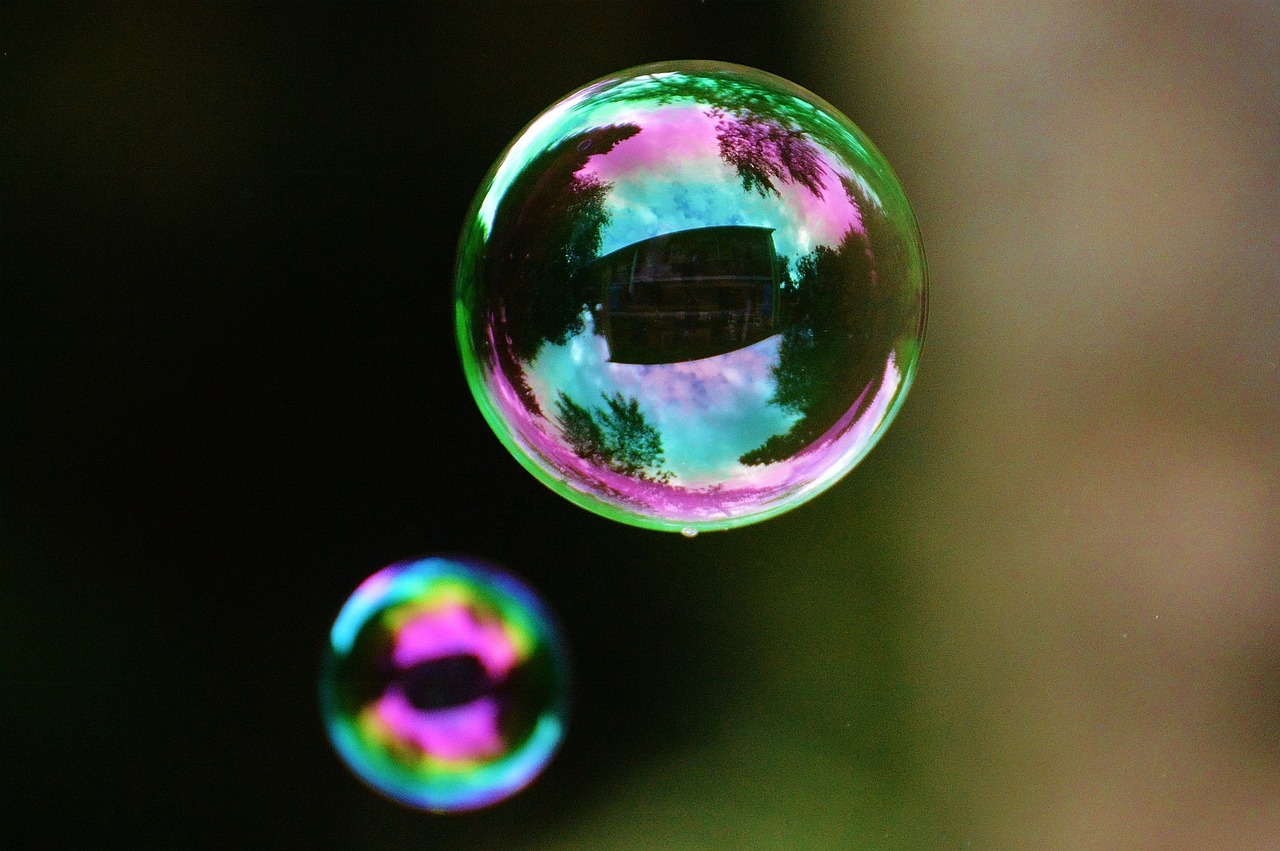
But this summer I’ve seen what’s left. Little thought bubbles have been drifting in and out of this water where I’ve been swimming. Little internal rants about the people around me. Thoughts like “They can’t be trusted (to do it my way) so I’ll just do it myself.” Even though these thoughts usually don’t disrupt my peace of mind in the moment, they tend to have a long-term effect.

And then there are the bubbles of self-doubt when I act out of integrity with myself in how I eat or treat my body.

So I’ve come back to Deep Practice. I’m investigating what happens when I actually write out my frustrations and investigate, on a daily basis. The early results are in: It DOES make a big difference to give time and attention, and trust in the process of inquiry. From the resulting clarity, I’m much more capable of listening to my body’s directions and acting on my own behalf.

If you want to explore this deep practice with a group this fall, click here. 


Loving the Bubbles of Freedom.

The Silence Beneath the Chatter

I just completed my fourth day of an at-home retreat. It was supposed to be silent. I truly intended it to be silent. After all, my home is in a forest-like setting near a park in a quiet neighborhood, with towering trees bearing silent testimony from every window. My ever-understanding husband took off for our cabin in the woods so I could have silence and the Internet for a couple days at a time. (I was participating in an online retreat that featured silence except for six or seven hours of inquiry a day with Byron Katie, a teacher of mine).

Back to the Sea

Mother, carry me,
Child I will always be,
Mother, carry me
Back to the sea

My sister and daughter and I wind our voices together in a song new yet ancient, returning from the Oregon coast. It would be the last trip I would take with my sister. My daughter, at eleven, was a skinny sprite who invited her aunt again and again to come back with her sand castles and stick-writing and cartwheels.

Is Your Ex REALLY a Narcissist?

Guest blog by my friend Linda Carroll, Marriage Therapist and author of Love Cycles, a book I highly recommend to clients

“My boyfriend is a narcissist. That’s why we broke up,” says Amy, case closed.

“My ex-wife has a borderline personality. That’s why we aren’t together,” says Jake, and no one asks if he had any part in the demise of the marriage.

“My brother is a sociopath,” says Todd. “That’s why our joint business venture was doomed.” End of discussion.

Commencing with Summer

Summer abounds with opportunities to notice our place on the Great Wheel of Life. And it all begins with June. Graduation. Weddings. Reunions. We gather to acknowledge movement from one part of life to another. For just a few minutes we come together like a tribe to remember, to catch up with ourselves. Read More>>

An Impatient Patient Surrenders

It’s a month now since I found myself climbing on the surgery gurney for a knee installation on my left leg. My right leg, ever the competitive First Child, was there first, six months ago. With the help of family, friends, and a whole infield of life coaches, I convinced myself it made sense to complete the job on the other side. The logic was watertight: I’d profit from my first experience and skate through it the second time.

What Does Life Want to Make of You?

“Before I can tell my life what I want to do with it, I must listen to my life telling me who I am.” Parker Palmer, Letting Your Life Speak.

Since one of my (somewhat) official titles is Master Life Coach, I talk to people pretty often who ask for help making something of their lives. They want an advisor, strategist, and a wrangler to help them get this unwieldy thing called Life back in control. At the very least, they’d like a lasso to round it up a bit. Nothing wrong with that approach, except the fact that Life usually has its own way with us when we’re fighting it. This is the source of abundant stress.